PEOPLE ANALYTICS FOR EVERYONE
Smarter, more strategic, and data-driven, is how People analytics is defined as in today's' world. Often referred to as talent analytics or HR Analytics as well, People analytics are essentially used for gathering and assessing people analytics leads to better decision-making through the application of statistics and other data interpretation techniques.
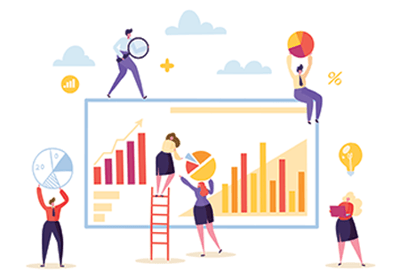
People
analytics has evolved considerably from the time when it was first used in
organizations in the mid-1900s. There has been a clear transitional change from
prescriptive analytics to predictive analytics, taking the more proactive
approach rather than reactive. Sophisticated data science, interactive data
visualization, and machine learning are all integral parts of people analytics
today.
The Process of
People Analytics:
People
analytics helps in applying the right statistics, data mining, machine
learning, survey management, and strategic workforce management tools to get
the data that is relevant for the business goals.
Explore
different People Analytics tools and then select the one that would enrich the
organization the most.
Once you have
zeroed upon the goal, the relevant data, and what the available options, create
an action plan. Apply big data and predictive analytics talent management, leadership development, and organizational
capabilities often helps in fine-tuning the action plan.
Maintain Legal
Compliance while collecting data. Before starting with the analytics project,
have a legal team validate the data sourcing techniques and processes.
Build a HR
based strategy backed by data and an effective action plan.
Top HR
Analytics tools:
Power BI- Power BI is a business analytics service by Microsoft. It aims to
provide interactive visualizations and business intelligence capabilities with
an interface simple enough for end users to create their own reports and
dashboards.
R- R is great for statistical analysis and visualization and is
well-suited to explore massive data sets. It enables you to analyze and clean
data sets with millions of rows of data. It also lets you visualize your data
and analysis. The most
often used Integrated Development Environment, or IDE, for R is RStudio.
Python- Python is an interpreted, high-level and general-purpose
programming language. It is a
general-purpose interpreted, interactive, object-oriented, and high-level
programming language.
Excel- Microsoft Excel is a spreadsheet developed by Microsoft for Windows,
macOS, Android and iOS. It features calculation, graphing tools, pivot tables,
and a macro programming language called Visual Basic for Applications. The good thing about Excel is that it’s very intuitive to most of us HR
data geeks and therefore easy to use.
Tableau- Tableau is arguably the best business intelligence tool (BI tool) out
there when it comes to visualization. It can
help anyone see and understand their data. Connect to almost any database, drag
and drop to create visualizations, and share with a click.
SPSS- SPSS Statistics is a software package used for interactive, or batched,
statistical analysis. Because SPSS is often used in the social sciences, a
lot of HR professionals know how to use it – especially the ones interested in
data analysis
HR analytics
enables HR professionals to make data-driven decisions to attract, manage, and
retain employees, which improves ROI. It helps leaders make decisions to create
better work environments and maximize employee productivity. It has a major
impact on the bottom-line when used effectively.
Comments
Post a Comment